
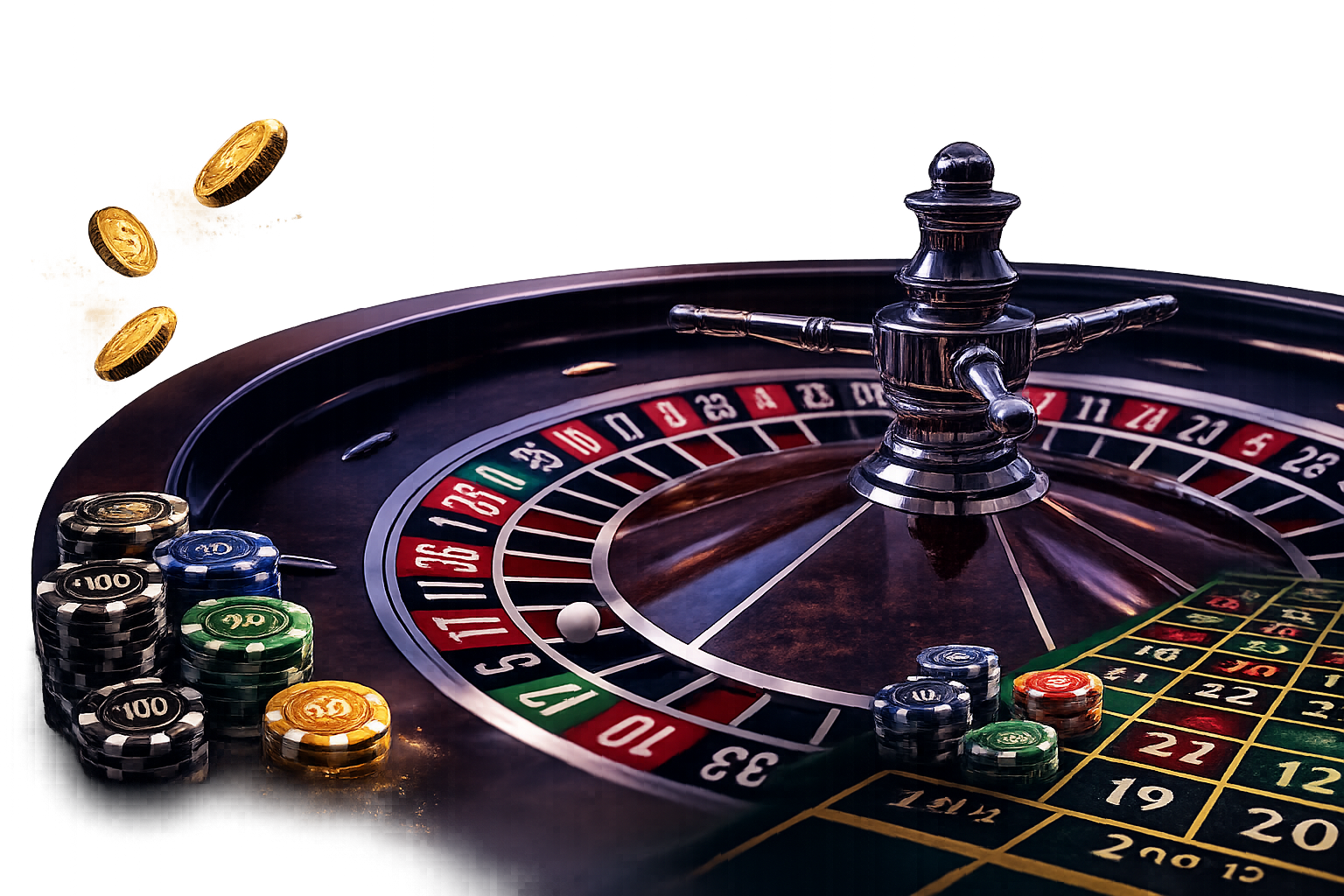
What Defines Roulette as a Game System
Roulette inside MCW Casino is built around a bet-first structure. The player makes a decision before the round begins, and once the spin starts, the system takes full control of the outcome. There are no additional inputs after the bet is placed. This creates a clean separation between interaction and resolution.
The round has a clear sequence: bet → spin → result. Unlike blackjack, there is no internal decision phase inside the round. The player participates at the entry point, not during the execution.

Bet-First Interaction Model
Roulette is defined by front-loaded interaction. All decisions are made before the spin. The player selects numbers, groups, or table zones, and after that, the system proceeds without interruption.
This makes roulette structurally simple. The player does not need to react during the round. There are no branching paths. The complexity exists in how bets are structured, not in how the round unfolds.
Wheel as Execution Mechanism
The roulette wheel functions as the execution layer of the game. It does not adapt to player behaviour. It does not respond to previous outcomes. Each spin is resolved independently according to the same mechanical or simulated process.
This is important for understanding the system. The wheel is not reacting or adjusting. It is completing the round based on fixed logic, ensuring consistency across sessions.
Session Pace and Round Speed
Roulette sessions tend to feel faster than blackjack because there are no pauses inside the round. Once the spin begins, the outcome follows quickly. This creates a continuous rhythm where rounds move one after another with minimal interruption.
Even in live roulette, where the dealer introduces slight delays, the structure remains simple. The player still interacts only at the beginning of each round.
Control vs Randomness
Control in roulette exists only at the betting stage. The player decides where to place chips, but once the spin starts, there is no further influence on the round.
Randomness fully defines the outcome. The separation between decision and result is clear and strict. This makes roulette one of the most transparent formats in terms of structure.
Interaction Depth Compared to Other Formats
Roulette has lower interaction depth than blackjack because the player is not involved after the bet. Compared to slots, however, roulette still requires an active choice before each round.
This places roulette in a middle position. It is more interactive than fully automated games, but less involved than decision-driven formats.
Game Interaction Comparison
| Format | Structure | Session Feel | Control Level | Interaction |
|---|---|---|---|---|
| Blackjack | Hand-based | Segmented | Medium | High |
| Roulette | Bet → spin | Continuous | Low | Medium |
| Slots | Automated | Loop-based | Low | Low |
| Live Roulette | Dealer-paced | Steady | Low | Medium |
How a Roulette Session Actually Feels
A roulette session in MCW Casino is built around repetition without interruption. Each round follows the same structure, and once the spin begins, there are no internal pauses or decision points. This creates a continuous flow where the player moves quickly from one outcome to the next.
The absence of a decision layer inside the round changes how the session is experienced. Instead of stopping to evaluate the situation, the player observes the result and prepares for the next entry. The rhythm becomes consistent and predictable at the structural level, even though outcomes remain variable.
Continuous Flow vs Segmented Play
Roulette operates as a continuous cycle. The player places a bet, the wheel spins, and the result is delivered. This loop repeats without internal breaks.
Compared to blackjack, where each hand is interrupted by decisions, roulette feels smoother and faster. Compared to slots, the flow is still controlled by the player, because each round begins with a deliberate choice rather than automatic execution.
This balance creates a session that is steady but not passive.
Speed, Repetition and Session Rhythm
Roulette sessions can feel fast because the round resolves quickly after the spin. There is no extended interaction phase. The player moves directly from decision to result.
Over time, this repetition builds a rhythm. The player becomes accustomed to the cycle, and the session starts to feel uniform. This uniformity is one of the defining traits of roulette.
Short sessions tend to feel very sharp and quick. Extended sessions feel more continuous, with less distinction between individual rounds.
Short Sessions vs Extended Play
In short sessions, roulette feels immediate. The player places a few bets, observes results, and exits the session quickly. The structure is easy to follow because there are only a few cycles.
In longer sessions, the repetition becomes the dominant experience. The player is no longer focused on individual rounds, but on the flow of the session as a whole. The distinction between spins becomes less noticeable.
This does not change how the game works. It changes how the session is perceived.
Roulette Session Structure Model
Roulette Session Reading
This graph maps roulette against adjacent formats through two qualitative dimensions: interaction depth and session continuity. It describes session shape, not outcomes, returns or performance.
Roulette stands out because interaction happens before the spin, not during it. That gives the format a cleaner and more continuous round structure than blackjack, while remaining more deliberate than fully automated slot cycles.
Reading the Session Model
The graph shows how roulette positions itself between automated and decision-heavy formats. It does not represent performance or outcomes. It reflects how interaction is distributed.
Roulette sits in the middle. It requires a decision before each round, but once the spin starts, the system completes the cycle without further input. This makes it less interactive than blackjack but more active than slots.
Live roulette slightly reduces the speed of interaction because of dealer pacing. The structure remains the same, but the rhythm becomes more controlled.
Slots remain fully automated, while blackjack remains the most decision-driven. Roulette connects these two models through its bet-first structure.
RNG in Roulette Does Not Follow Previous Spins
Roulette in MCW Casino should be read as an independent spin format. Each round is resolved on its own, and previous results do not instruct the next one. A red result does not make black more likely on the following spin. A long sequence on one side does not create a built-in correction. The system does not carry forward a need to balance visible patterns.
This point matters because roulette naturally produces visual streaks. The wheel creates sequences that are easy to notice, and that often leads players to read short-term repetition as a signal. From a product and logic perspective, that interpretation is weak. Visible repetition is part of distribution, not evidence of system memory.
Memoryless Logic and Pattern Illusion
When roulette is described as memoryless, the meaning is direct: earlier spins do not change the probability structure of the next spin. The game does not store pressure to reverse the recent pattern. It does not decide that several low numbers should be followed by high numbers, or that one colour has become “due.”
The wheel may produce clusters, streaks, and uneven short samples, but those should not be presented as predictive structures. They are part of how randomness looks in short windows. A session can appear patterned without actually containing a recoverable pattern.
RTP Is a Long-Horizon Information Layer
RTP in roulette should be framed carefully. It is a long-term model that describes theoretical return across extensive play, not a promise attached to a short session. This is especially important in roulette because the round structure is so clean. The simplicity of the game can make short sessions feel easier to interpret than they really are.
A small number of spins may sit far above or below the long-term model. That does not invalidate RTP. It simply shows that short samples are not the scale at which RTP becomes meaningful.
Short Sessions Do Not Represent the RTP
A player may spend a short session on roulette and leave with a result that feels extreme in either direction. That should not be mistaken for evidence that the format is overperforming or underperforming. Theoretical return is not designed to describe what happens across a few spins.
This separation helps keep the page clear and credible. Roulette outcomes in short windows are exposed to variance. RTP belongs to the structure of the game at scale, not to the immediate emotional reading of a brief session.
Volatility Is About Distribution, Not Value Quality
Volatility should not be described as profitability or opportunity. That framing distorts what the term means. In roulette, volatility is better understood as the distribution pattern of session outcomes over time. It describes how results can cluster, stretch, or fluctuate across play.
Because roulette has a simple bet-and-spin structure, its volatility is often easier to observe than to interpret. The player sees outcomes arrive cleanly and repeatedly, which can make short swings feel more meaningful than they are. The key point is that volatility describes the shape of variance, not the quality of the game.
Roulette Has Clear Input, But No In-Round Control
One reason roulette is useful in product explanation is that it draws a very sharp line between input and outcome. The player decides where to place the stake, but once the spin begins, there is no additional control layer. This is cleaner than blackjack, where the player continues to act inside the round.
That difference helps explain why roulette feels transparent. The player controls entry, not resolution. The system controls the spin. The outcome is not adjusted by previous rounds, current mood of the session, or visible table history.
Why This Matters for Trust
A strong roulette page should separate the key layers clearly. RNG explains independence. RTP explains long-term modelling. Volatility explains distribution. Bet selection explains entry structure. None of these should be blended into promises or implied forecasting.
That separation improves trust and keeps the page aligned with operator-level framing. The game becomes easier to understand without drifting into misleading interpretation.
Roulette Format Reading Table
Roulette Reading Across Game Formats
This table compares roulette with adjacent formats through pace, interaction load, continuity and practical use context. It supports product reading rather than promotional ranking.
| Format | Pace | Interaction Load | Session Continuity | Suitable For |
|---|---|---|---|---|
| Digital Roulette | Fast and repeatable. The cycle moves quickly from bet placement to result. | Moderate. Input happens before the spin, with no further action during the round. | High. The session remains smooth because each round follows the same uninterrupted structure. | Readers looking for a clear, front-loaded interaction model with fast round turnover. |
| Live Roulette | Measured by dealer timing and table cadence rather than instant digital execution. | Moderate. The core action is still bet placement, but pacing feels more spaced out. | Medium to high. The structure stays consistent, though the live table softens the speed. | Users who prefer a steadier environment with the same basic roulette logic. |
| Blackjack | Measured, with each hand unfolding through several decision points. | High. The player remains active inside the round after the initial deal. | Moderate. Repeated pauses between deal, decision and result segment the session. | Readers who want a decision-led format with deeper in-round involvement. |
| Slots | Continuous and system-led, often with minimal interruption between outcomes. | Low. The player starts the cycle, but the round resolves automatically. | High. The visual and structural loop stays continuous across extended sessions. | Users who prefer passive pacing and lighter per-round involvement. |
How to Read the Table
The table highlights the structural role roulette plays among common casino formats. It keeps interaction at the start of the round, which is why it feels cleaner and more continuous than blackjack. At the same time, it remains more deliberate than fully automated slot cycles because the player still defines entry before each spin.
That makes roulette useful on a product page because it is easy to explain without oversimplifying. The player selects exposure, the system executes the round, and the result arrives without an internal decision layer.
Roulette Formats Inside MCW Casino
Roulette inside MCW Casino is presented through several formats, but the underlying structure remains the same. The difference is not in how outcomes are generated, but in how the session is experienced.
Digital roulette is the most direct version. The player places a bet, the spin resolves quickly, and the next round begins almost immediately. The system is fast, consistent, and fully controlled by the player’s pace. There are no external delays, and the session can move rapidly from one round to another.
Live roulette introduces a different rhythm. The same bet-first structure applies, but the presence of a dealer slows down the cycle. The player waits for the spin to be completed in real time, which creates a more measured experience. The logic of the game does not change, but the pacing does.
European Structure and Table Logic
Most roulette tables follow the European format with a single zero. This structure defines how bets are resolved and how outcomes are distributed across the wheel.
The layout of the table is consistent across formats. Numbers, outside bets, and groupings remain the same whether the player is on desktop, mobile, or live tables. This consistency allows the player to move between formats without needing to relearn the structure.
The important point is that the table defines exposure, not outcome. The player selects where to place bets, but the result is always determined by the spin itself.
Mobile vs Desktop Experience
On desktop, roulette is presented with a wider layout. The table is easier to read, and the player can view multiple betting options at once. This makes longer sessions feel more controlled and less compressed.
On mobile, the interface becomes more compact. The same betting grid is available, but interaction is simplified through taps and layered UI. This can make sessions feel faster, even though the structure remains unchanged.
The difference is not in the rules of the game. It is in how quickly the player moves between rounds and how the information is displayed.
Pace Differences Across Formats
Digital roulette is the fastest format. The cycle from bet to result is short, and the player can move through many rounds in a limited time.
Live roulette slows the session slightly. The dealer introduces natural pauses, and the spin takes longer to resolve. This reduces the number of rounds per session but creates a steadier rhythm.
These differences affect how the session feels, not how the game behaves. Each spin remains independent regardless of pace.
Wagering and Roulette Contribution
When roulette is used within a bonus environment, its contribution to wagering is often structured differently. In many cases, roulette contributes at a lower percentage compared to slots.
This should not be interpreted as a limitation of the game. It reflects how wagering systems are designed. Wagering tracks eligible stake, not effort or engagement. Roulette’s structure makes it more controlled, which is why contribution rules may vary.
Bonus Layer Does Not Change the Game
A bonus does not alter the mechanics of roulette. It does not affect how the wheel spins, and it does not change probabilities or outcomes. The game remains exactly the same.
The only difference is how funds are handled. The system may restrict withdrawals until certain conditions are met, but the underlying game logic is unchanged.
Demo Mode and Exploration
Demo roulette allows the player to explore the structure of the game without using real funds. It shows how bets interact with the table and how the session flows over time.
It should not be treated as a predictive environment. Demo play helps understand mechanics, not forecast outcomes.
Bringing the Structure Together
Roulette inside MCW Casino is defined by clarity. The player selects a bet, the system executes the spin, and the result is delivered without internal complexity.
Formats, pacing, and devices change how the session feels, but not how the game works. The separation between input and outcome remains the same across all versions of roulette.






Comments