

MCW App Ecosystem
What “MCW App” actually means
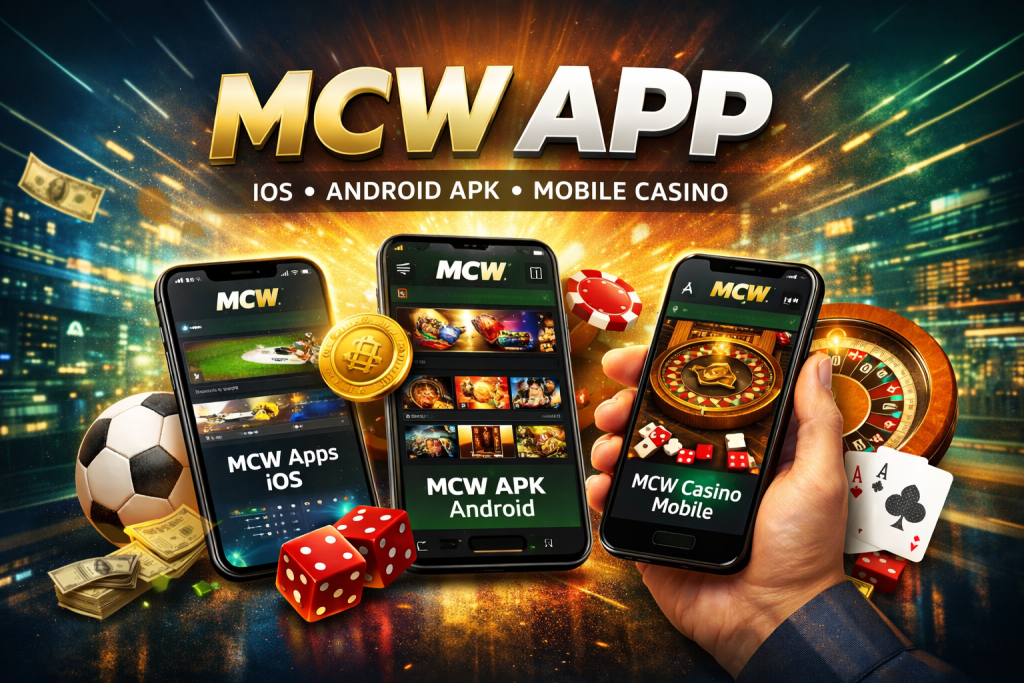
On MCW Casino, the term “app” does not refer to a single unified product. It represents three different access environments that connect to the same account system but operate under different technical conditions. These are the iOS version, the Android APK, and the browser-based mobile version. They are not separate platforms. They are different entry points into the same backend system.
This distinction matters because users often assume that installing an app changes how the casino behaves. It does not. The account, wallet, RTP logic, RNG behavior, and bonus structure remain identical regardless of how the user accesses the platform. What changes is the delivery layer — how the interface is rendered, how sessions are maintained, and how device permissions interact with the system.
Understanding this early prevents a common misconception: the app is not a “better version” of the platform. It is simply a different way of accessing the same environment.
iOS, APK, and Mobile Web are structurally different
The iOS version typically operates within stricter system rules. It relies on the Apple ecosystem, which controls installation, background behavior, and update cycles. Because of that, the iOS experience is often more standardized, but also more limited in terms of flexibility. Certain features may be constrained by platform policies rather than by the casino itself.
The Android APK version exists outside of a central store model. It is installed directly and updated independently. This gives it more flexibility in terms of feature rollout and compatibility with different devices. At the same time, it requires a more conscious installation step, which introduces a small amount of friction at the beginning but removes dependency on external approval layers.
The mobile web version is the most neutral of the three. It runs entirely in the browser and does not require installation. This makes it the most accessible option, especially for users who do not want to manage app updates or storage. However, it depends more heavily on browser performance and does not integrate as deeply with device-level features.
The important point is that none of these access environments changes the underlying product logic. A user may open MCW Casino through iOS, install the Android APK, or stay on mobile web, but the same account state, wallet rules, bonus conditions, and verification layers continue to apply. The app can affect convenience, loading behavior, update flow, and device integration, but it does not create a different RTP model, alter RNG independence, or soften volatility. The access method changes the interface path, not the mathematical or account-layer rules behind the platform.
Same system, different delivery layer
All three environments connect to the same account system. That includes:
- the same wallet balance
- the same bonus state
- the same verification status
- the same session rules (with minor variation in persistence)
Switching between iOS, APK, and mobile web does not create multiple accounts or separate balances. It simply moves the user between different interfaces that read from the same system.
This is why the app discussion should not be framed as a feature comparison in terms of “which one wins.” The more accurate framing is operational: which environment fits the user’s device and usage pattern.
No impact on game logic
Using an app does not change how games behave. RTP remains a long-term statistical model independent of device type. RNG remains memoryless and does not adjust based on whether the user is on mobile web or a native app. Volatility continues to describe distribution patterns, not outcomes tied to platform choice.
This separation is critical. The app is an access layer. The games operate on a different layer entirely. Confusing the two leads to false expectations about performance or results.
Why the platform keeps multiple access paths
Maintaining iOS, APK, and mobile web versions allows the platform to stay accessible under different technical and regional conditions. Some users prefer installation-based access for faster entry and stable sessions. Others prefer browser-based access to avoid downloads. Some devices support one better than the other.
Instead of forcing a single model, MCW Casino keeps the structure flexible. The system is designed so that no matter how the user enters, the underlying experience remains consistent.
Platform Compatibility & Access Conditions
How each environment behaves across devices
The three access paths — iOS app, Android APK, and mobile web — are built on the same system but behave differently depending on the device, operating system, and browser context. These differences are not about features inside the casino itself. They are about how the interface is delivered, how stable sessions remain, and how much control the platform has over the environment.
On mobile devices, these differences become more visible because performance is tied not only to the platform but also to the device hardware, browser engine, and background process handling. The same account can feel slightly different depending on where it is accessed, even though the underlying logic remains unchanged.
The goal is not to define one as superior. The goal is to understand how each behaves in practice.
Compatibility is not equal to experience
Compatibility answers whether the platform works. Experience describes how stable, responsive, and continuous that interaction feels over time. A browser-based session may be fully compatible but still reset more often. An installed app may maintain longer sessions but depend on updates. These are trade-offs, not advantages or disadvantages.
MCW Casino structures its access layers so that all three options remain usable, but each carries its own operational characteristics. These characteristics are consistent and predictable rather than random.
MCW App Compatibility Matrix
| Environment | Installation | Session Stability | Performance Consistency | System Dependency |
|---|---|---|---|---|
| iOS App | Store-based | Stable | Consistent | Apple controlled |
| Android APK | Manual install | Stable | Flexible | Device dependent |
| Mobile Web | No install | Session resets | Browser based | Browser engine |
What this table actually shows
The table does not compare features inside the casino. It compares the delivery conditions of each access method. That includes how the environment is installed, how stable sessions remain over time, how consistent performance feels across devices, and how much control external systems have over the experience.
For example, the iOS version is stable in terms of session continuity, but it is also constrained by Apple’s ecosystem. The Android APK allows more flexibility but depends on device configuration. The mobile web version removes installation friction entirely but trades that for less persistent sessions and stronger dependence on browser behavior.
These are structural differences. They do not change how the account works or how games behave.
Why this matters after sign up
After registration, the user chooses how they will return to the platform. That choice directly affects session continuity, login frequency, and overall usability. A user who prefers quick access without installation will naturally lean toward mobile web. A user who values longer session persistence may prefer an installed app.
The platform does not enforce a choice. It allows switching between all three without affecting account state. That flexibility is part of the system design, not an extra feature.
Session Continuity vs Reset Behaviour
Why session behaviour matters more than installation
After sign up, the real difference between iOS, APK, and mobile web becomes visible not in features, but in how the session behaves over time. The platform does not change. The account does not change. What changes is how long the user stays connected without needing to log in again, how the session reacts to inactivity, and how often the environment resets itself.
This is where most users feel the difference, even if they cannot immediately explain it. A session that remains stable across app switches feels smoother. A session that resets frequently introduces friction. Neither of these changes the system itself, but they shape how usable the platform feels in practice.
Continuity and resets are system-driven, not random
Session persistence is not arbitrary. It is controlled by a combination of platform rules, device behavior, and security logic. Installed apps typically maintain longer sessions because they operate in a more controlled environment. Browser-based access depends on cookies, tab lifecycle, and background restrictions, which makes session resets more frequent.
This does not mean that one environment is “better.” It means each one operates under different technical constraints. The platform adapts to those constraints instead of trying to override them.
Session Model
How to read this model
The upper line represents session continuity — how long the user remains logged in and how smoothly the session persists across normal usage. The lower line represents reset pressure — how likely the session is to be interrupted due to inactivity, browser behavior, or system constraints.
Installed environments like iOS and APK tend to move toward higher continuity and lower reset pressure. Mobile web moves in the opposite direction because it depends on browser lifecycle rules. That is not a limitation of the casino. It is a property of the environment itself.
What this changes for the user
For users who access the platform occasionally and do not mind logging in again, mobile web remains fully functional. For users who expect faster return access and fewer interruptions, installed apps provide a more stable session layer.
This difference becomes more noticeable over time rather than immediately after sign up. The first session often feels similar across all environments. The divergence appears in repeated use.
No connection to gameplay
Session stability does not affect RTP, RNG, or volatility. It does not increase or decrease outcomes. It only affects how the account remains connected to the platform. The separation between account state and game logic remains strict, regardless of how stable or unstable the session feels.
Feature Access Matrix
Why feature comparison should stay structural
Once the session model is clear, the next useful question is not which app feels more “premium”, but which access path exposes which parts of the platform most directly. On MCW Casino, iOS, Android APK, and mobile web all connect to the same account system, which means the user is not choosing between different products. They are choosing between different delivery environments for the same product. Because of that, a proper comparison should stay structural and avoid exaggerated language about performance or gameplay.
The most practical way to compare these environments is through access behaviour: installation requirement, login continuity, wallet access, update handling, and how tightly the environment depends on external platform rules. This creates a much cleaner picture than generic claims about speed or convenience. It also helps the user decide based on device habits rather than marketing language.
A comparison like this matters most after the first session. During initial access, all three options may feel similar because they lead into the same account. The real divergence appears in repeated use, especially when users switch devices, return after inactivity, or expect account continuity with minimal friction.
Feature access matrix
What this table makes clear
The matrix shows that the biggest differences between MCW apps iOS, MCW APK Android, and MCW Casino mobile sit in the access layer rather than in the product core. Wallet behaviour, bonus state, and account identity remain shared across all three. The real variations appear in installation model, update path, session continuity, and dependency on device or browser rules. That keeps the comparison grounded and more useful for actual decision-making.
It also highlights why “mobile app” should not be used as shorthand for a single experience. iOS and APK may both be installed environments, but they still behave differently because they inherit different operating system expectations. Mobile web removes installation entirely, which makes it easier to enter, but also more exposed to reset pressure and browser lifecycle controls. These are trade-offs inside the delivery layer, not differences in game or account logic.
Why feature comparison should not drift into gameplay claims
A page like this should stay disciplined about what the comparison means. Stronger session continuity does not create better results. Easier wallet access does not change RTP. A smoother return experience does not influence RNG or volatility. Those systems remain fully outside the app environment comparison. The matrix is useful precisely because it explains what the platform layer changes and leaves the game layer untouched.
App Limits, Update Logic & Control Layer
Why the final comparison needs boundaries, not just access points
A good app page should not end with a simple feature checklist, because access alone does not explain how the platform behaves over time. The final layer is control: what happens when the environment needs updating, what limits come from the device or browser rather than from the casino itself, and where the platform may require extra validation or re-entry. This is especially relevant for MCW apps iOS, MCW APK Android, and MCW Casino mobile, because they all connect to the same account system while inheriting different technical constraints from their delivery layer.
This is where the page becomes more useful from a product perspective. Users do not only want to know whether an app opens. They also want to understand what makes one environment easier to maintain, which one depends more heavily on external rules, and why a session may feel stable one day and require re-login the next. These are not signs of inconsistency in the casino logic. They are part of how mobile delivery works across different ecosystems.
The most accurate way to frame this is to separate three ideas. First, the account system remains shared. Second, the access path changes how continuity, updates, and resets feel. Third, control events such as re-login, update prompts, or verification checks may appear differently depending on the environment. None of that changes the underlying product. It only changes how the user reaches and maintains access to it.
App control and maintenance matrix
App control model
What the final comparison actually tells the user
Taken together, the table and graph show that the main difference between MCW apps iOS, MCW APK Android, and MCW Casino mobile is not product depth but delivery conditions. Installed paths usually support better continuity and lower re-entry friction, while browser access removes installation friction and simplifies update handling. APK introduces a more flexible but slightly more self-managed path. iOS remains more standardised but more tightly shaped by platform rules. Mobile web stays the lightest route into the platform, but also the most exposed to reset behaviour over time.
This is the right place to end the page because it clarifies a boundary that users often misunderstand. Choosing an app environment changes how the platform is accessed and maintained. It does not create a different account, a different wallet, or a different game model. RTP, RNG, and volatility remain exactly where they belong — in the game layer, fully separate from the access layer. That separation is what keeps the page useful and product-led rather than promotional.
Why a page like this should stay neutral
A mobile app page becomes stronger when it avoids forcing a recommendation. Some users value installed continuity and will prefer iOS or APK. Others want immediate access with no setup and will prefer mobile web. The platform does not need to declare a winner, because the better option depends on the user’s device habits and tolerance for maintenance. A more neutral explanation gives the reader enough information to choose without being pushed toward an artificial conclusion.






Comments